🎨 In Afrocentric Art, Color Isn’t Just Seen—It’s Felt
Red doesn’t just mean passion.
Gold isn’t just luxe.
In Afrocentric art, color carries culture. It tells stories, holds memory, pulses with ancestral energy and is even shaping modern art.
Every hue is a heartbeat. Every palette is a protest, a prayer, or a party.
So when we talk about colors in Afrocentric art, we’re not talking vibes—we’re talking visual language.
And whether you’re curating a gallery wall or shopping for your next print, it’s time to learn how to read it like a book.
“In Black art, color doesn’t just match the room. It matches the revolution.”
🧠 Why Color Symbolism Matters in Black & African Art
Color has always been sacred in African traditions. From tribal textiles to spiritual ceremonies to political movements, every pigment holds purpose.
And in the diaspora? That language didn’t fade. It evolved—into mural art, digital prints, protest posters, and even fashion.
According to visual culture scholars, color in Afrocentric design:
- Anchors identity
- Honors ancestral lineage
- Amplifies emotion
- Sparks dialogue across generations
“It’s not just red, black, and green. It’s blood, skin, and land.”
Let’s decode the full spectrum:
❤️ Red: Bloodline, Struggle, and Strength
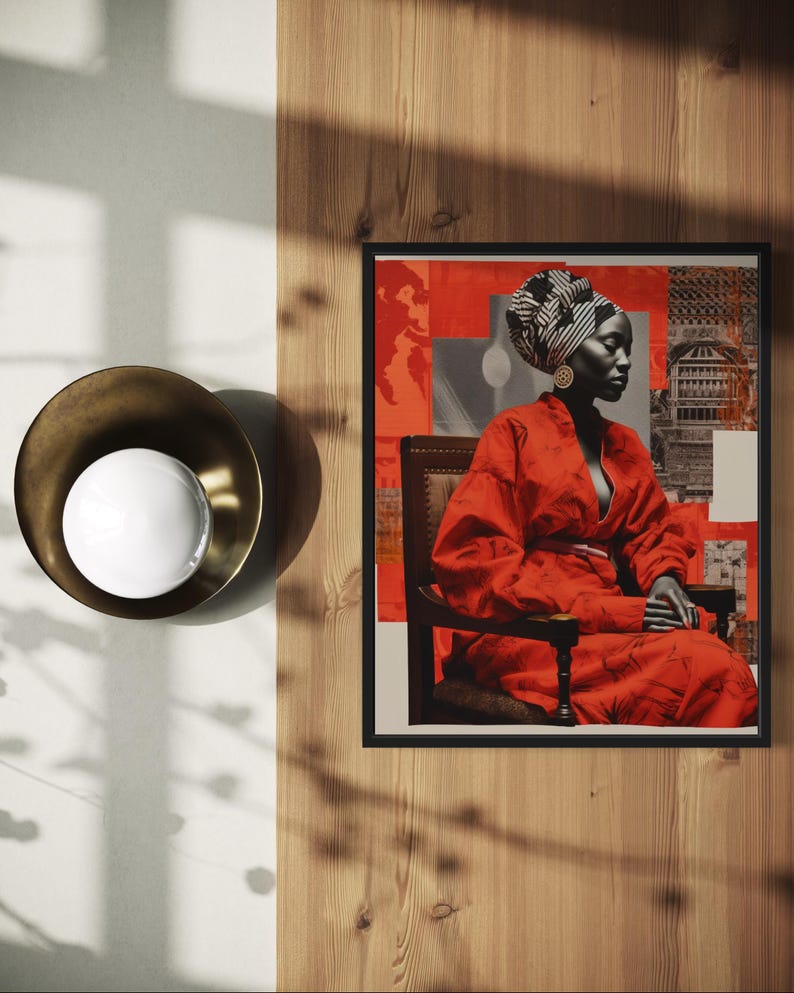
Red symbolizes:
- Life force
- Sacrifice and resistance
- Martyrdom of ancestors
- Righteous rage and spiritual fire
You’ll see it in:
- Pan-African flags
- Kente cloths
- Revolution posters
- Murals honoring lost lives
In art, it can be powerful, painful, or proud—all at once.
“Red in Black art bleeds truth. It doesn’t whisper—it roars.”
🖤 Black: The People, the Power, the Presence
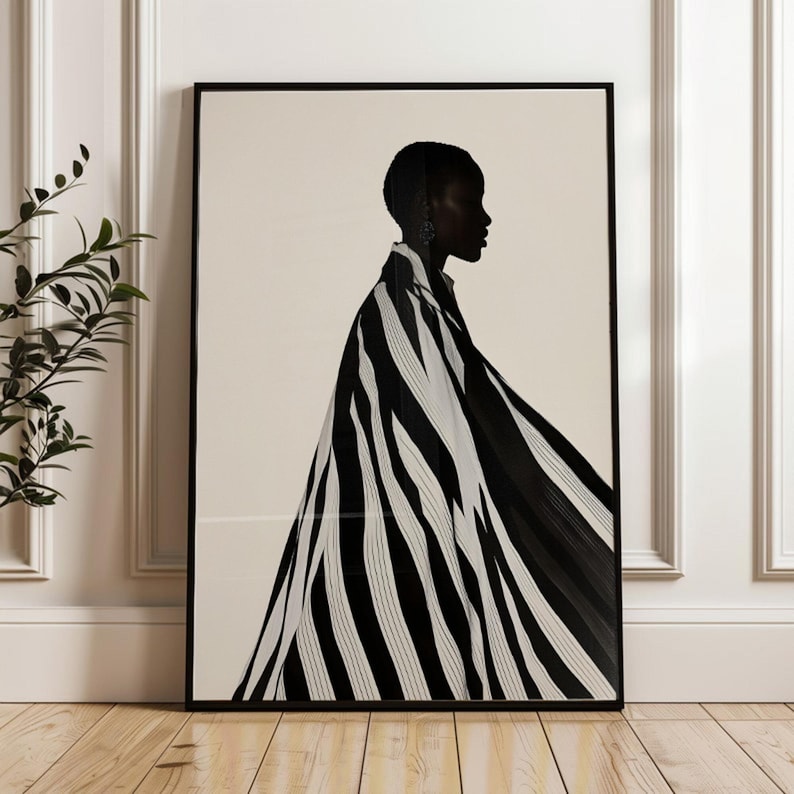
Black represents:
- The African people
- Resilience
- Divine mystery and depth
- Solidarity
It’s used to ground a palette—just like Black culture grounds global creativity.
In design, black is more than absence. It’s identity. It’s elegance. It’s everything.
“Black is not void. It’s volume.”
💚 Green: The Land, Growth, and Rebirth
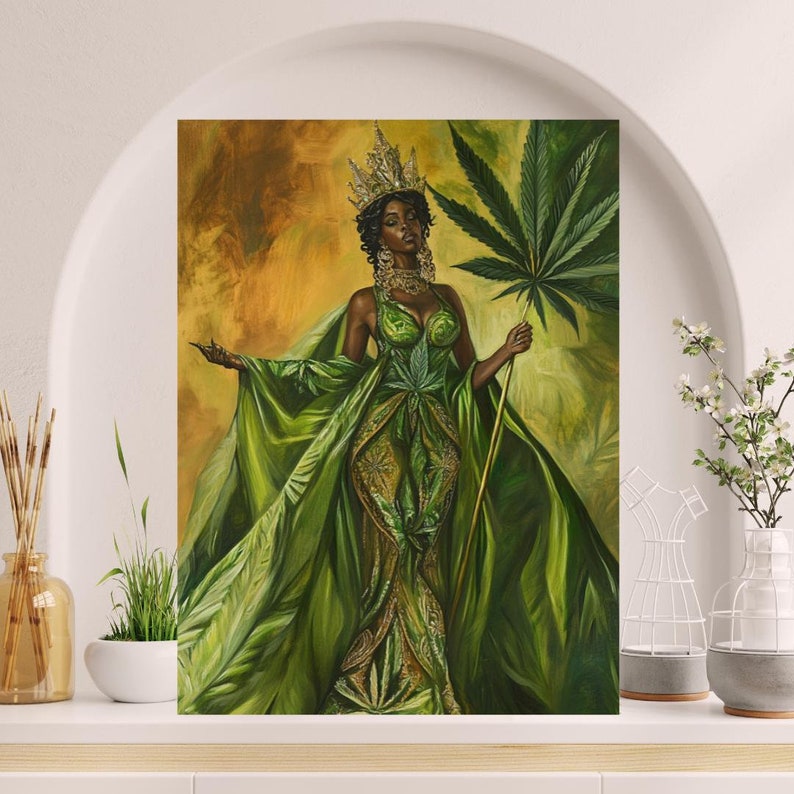
Green symbolizes:
- Mother Africa and fertility
- Growth and healing
- Reconnection and hope
From the lush tropics to liberation movements, green is a call to come home—physically, spiritually, and politically.
You’ll see it in:
- Pan-African symbolism
- Afro-futurist art
- Botanical prints with a cultural twist
“Green in Afrocentric art is the future blooming from the past.”
💛 Gold: Royalty, Divinity, and Wealth
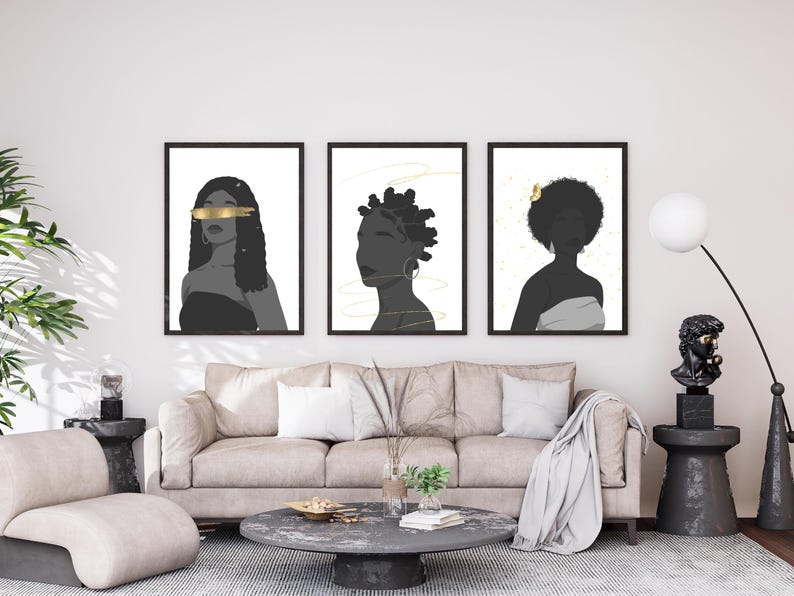
Gold = opulence with purpose. In traditional African societies, it represented:
- Kingship and queenship
- Spiritual elevation
- Prosperity and power
In modern prints? It still shines. Literally and metaphorically.
Think:
- Haloed silhouettes
- Jewelry on canvas
- Gold foil highlights in digital illustrations
“Gold doesn’t flex—it affirms.”
💙 Blue: Protection, Peace, and the Spirit Realm
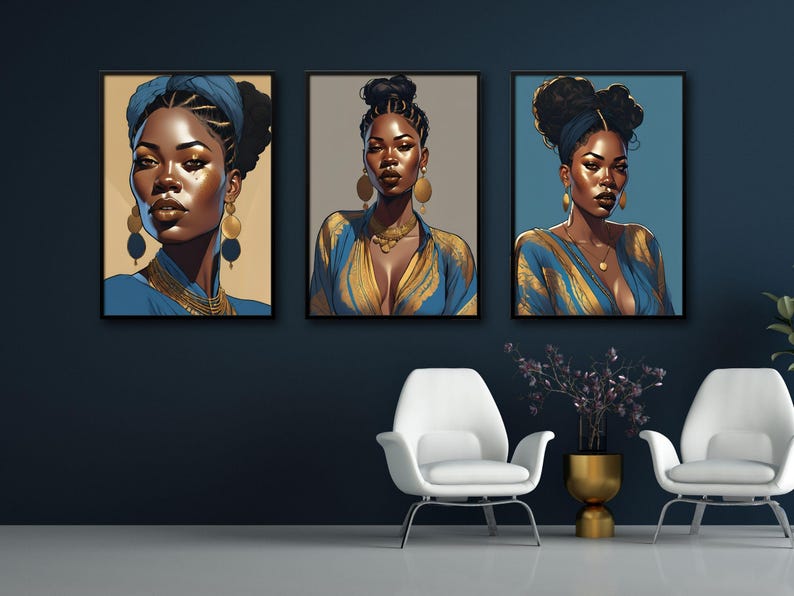
Deep indigo and ultramarine tones often represent:
- Wisdom
- Night sky and ancestors
- Protection in rituals
In some traditions (like among the Yoruba), blue is a spiritual armor.
When you see blue in Afrocentric art, it’s often a portal—a way to connect beyond the visible.
“Blue holds the silence where our spirits speak.”
🤎 Earth Tones: Grounding, Ancestry, and Texture
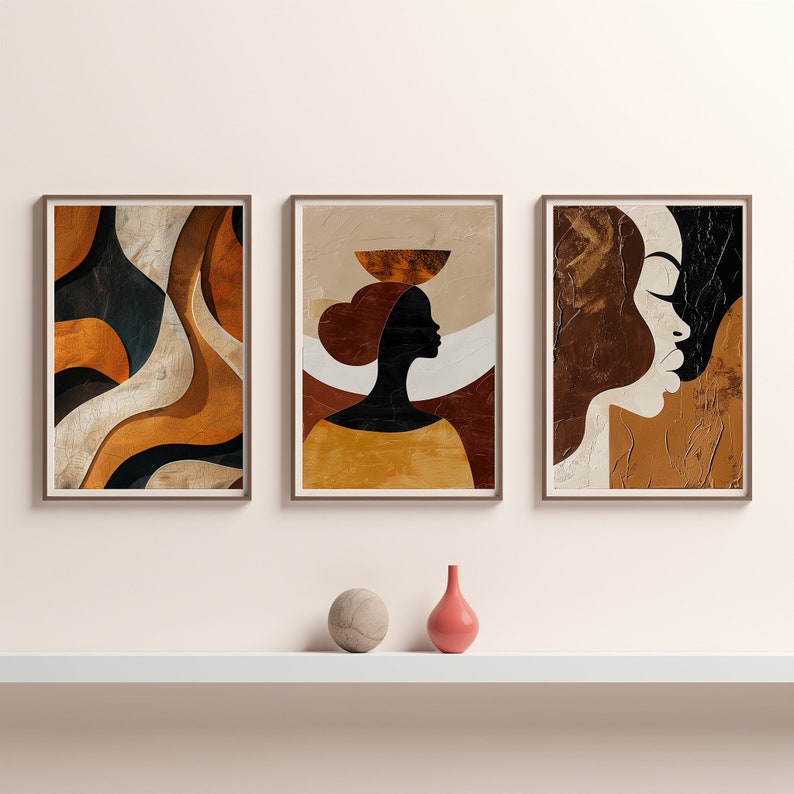
Browns, ochres, and terracottas aren’t just on-trend—they’re traditional.
They symbolize:
- Home soil and clay
- Foundation and physical body
- Humility and rootedness
You’ll find them in mud cloths, pottery patterns, and portrait backgrounds that say, “This body is made from something ancient.”
“Earth tones in Black art remind us: our bodies came from the land—and the land remembers.”
🎨 How to Curate a Color-Rich Afrocentric Space
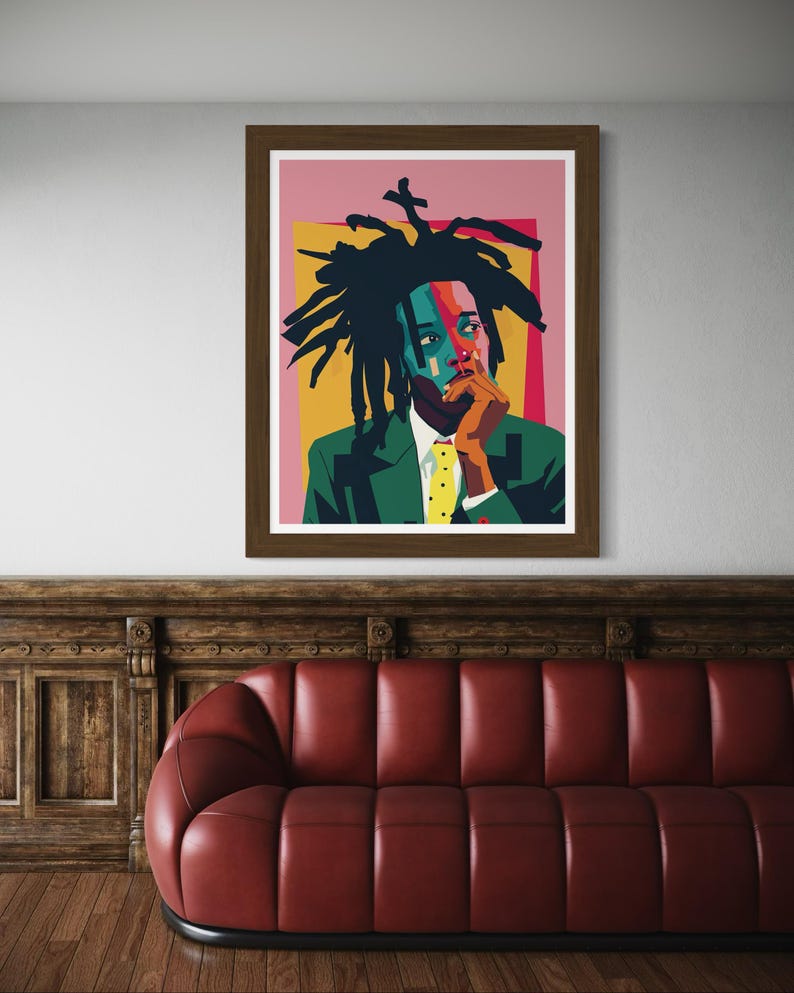
Want your walls to speak fluently in color symbolism? Here’s how:
Step 1: Pick Your Core Message
What do you want your space to say?
- Power? → Black and red
- Healing? → Green and blue
- Elegance? → Gold and earth tones
Step 2: Choose Prints That Speak That Language
Layer:
- One large print with your primary color
- Two to three smaller pieces with symbolic accents
- A quote print with minimal but intentional color use
Step 3: Add Depth with Materials
Don’t just frame it. Add:
- Woven textures
- Brass or gold finishes
- A backdrop of complementary paint or fabric
Make your space a living cultural palette.
💬 Final Thoughts: Don’t Just Hang Art—Honor It
Colors in Afrocentric art doesn’t ask to be explained. It speaks in texture, tone, and truth.
But when you understand the language of color, you unlock something deeper:
You realize every hue has a history.
Every shade is storytelling.
And your space isn’t just decorated—it’s declaring something sacred.
“In Afrocentric art, color doesn’t just match your aesthetic. It matches your identity.”
So choose your pigments with pride.
And let your walls say what your spirit already knows.
Explore more colors in Afrocentric art:
- Blue
- Pink
- Yellow, Green, and Red
- Neutrals
- Mixed + Modern